-
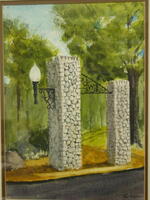
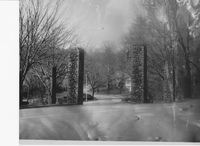 Wakefield Park stone entrance gate
 "Attached is my entry for the "Then and Now" contest. I chose "Park Gates -- Wakefield, Massachusetts" for my subject. The gates on Chestnut Street form the entrance to Wakefield Park, on the west side of town. I have been interested in the Park's history since moving here in the mid-1990's. The land was originally owned by Dr. Charles Jordan and consisted largely of pastureland and orchards. In the early 1890's, Boston lawyer Charles Stedman Hanks and J. S. Merrill developed the 100-acre property to attract upper middle-class residents. Wakefield Park may have been the first planned suburban development in the United States, and is still a very attractive place to live. I took my photograph using a late 19-century technique, probably similar to the one used to take the original picture. I made the contact print from a 10" X 12" glass negative that I exposed with a 100-year old camera and brass lens. To make the negative, I poured a silver-gelatine emulsion gently on a glass plate to form a smooth coating, and allowed it to dry. I exposed the plate for 8 seconds about 10 a.m. on March 24th, 2010 from the same position and approximate time of day as the original. Comparing the two photographs, changes over the past 120 years are apparent. The original Park Avenue was unpaved and much narrower than it is now. The building slightly visible on the right was moved across Park Avenue sometime before the Emmanuel Temple was built. The house that appears between the gates had a second floor added in the 1970's according to its current owner. In addition, all electric lines have since been put underground." - caption provided by Doug Heath, contest winner.
-
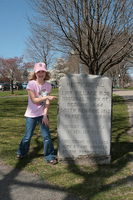 The Rockery
 "As Sofia and I walked around town, taking pictures for the Library's Wakefield Then & Now Photo Contest, I thought of the original picture postcard of The Rockery, postmarked 1914, with a young boy in his coat and cap posed near the historical marker. Today, The Rockery has become a monument to the Spanish-American war and the historical marker has been moved across the street to the upper common. I marvel at the changes this boy must have seen over his lifetime, not only the physical differences in roads, houses, and buildings, but also the things that science and technology have brought to our day: modern medicine, radio, television, the internet. I wonder at things Sofia and those who come after her will see in their lifetimes. Will they be as different from our present time as we are from the little boy on The Rockery?" - caption provided by David Bruce, contest winner.
-
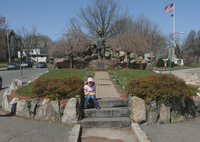 The Rockery
 "As Sofia and I walked around town, taking pictures for the Library's Wakefield Then & Now Photo Contest, I thought of the original picture postcard of The Rockery, postmarked 1914, with a young boy in his coat and cap posed near the historical marker. Today, The Rockery has become a monument to the Spanish-American war and the historical marker has been moved across the street to the upper common. I marvel at the changes this boy must have seen over his lifetime, not only the physical differences in roads, houses, and buildings, but also the things that science and technology have brought to our day: modern medicine, radio, television, the internet. I wonder at things Sofia and those who come after her will see in their lifetimes. Will they be as different from our present time as we are from the little boy on The Rockery?" - caption provided by David Bruce, contest winner.
-
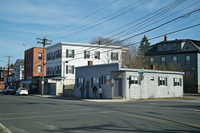 Corner of Water Street and Wakefield Avenue
 "I thought the buildings might be torn down or reconstructed, but the buildings were still there but different colors and the stores have changed owners. In the original photo, two women and one man were walking. Since there were no people walking by, I had my mother, sister and our friend stand so it would look like the original photo. You can see that the clothes they wore were different than those we wear now. It helps tell the age of the photo by the car parked on the side of the street. Cars have changed a lot since that photo was taken." - caption provided by Cole Kraus (age 10), contest winner.
-
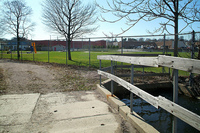 Wakefield rattan factories on Water Street
 "No longer standing are the historic buildings that the founder of our town used for many years as rattan factories. The open space that once had cows roaming in the foreground now remains somewhat open in the form of two baseball fields and a small playground. The brook remains and runs alongside the park and crosses under Water Street under a small bridge. It was difficult to get the same vantage point. The distinct rooftop of Lincoln School in the distant top right let me know I was photographing in the right direction." - caption provided by Annette Dupon, contest winner.;Winner of photo contest, Second Place, Adult category.
-
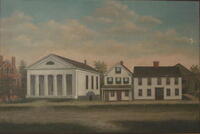 Universalist Church, Wakefield in 1858
-
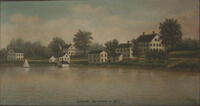 Lakeside, Wakefield in 1870
-
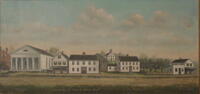 East side, Main St., in 1858
-
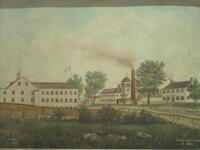 Wakefield rattan works in 1865
-
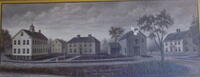 Yale Ave. to Lafayette St., South Reading, Mass., 1865
-
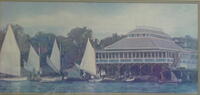 Wiley's boathouse
-
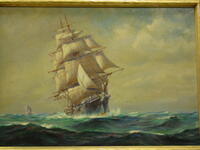 Wide horizons
-
 [Wakefield Park stone entrance gate]
-
 Wakefield 350th musical celebration June 18, 1994
-
 Town Hall and fire engine house, Church St., South Reading, 1852
-
 [Stone wall in woods]
-
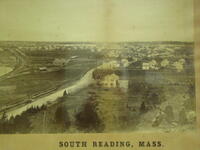 South Reading, Mass., from Hart's Hill, 1866
-
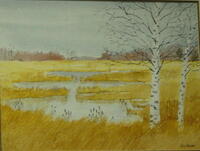 [Reedy Meadow]
-
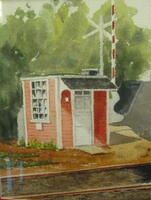 [Railroad shack corner of Forest and Main Streets]
-
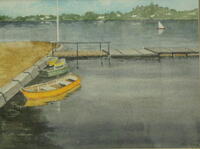 [Quannapowitt Yacht Club]
-
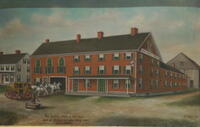 Quannapowitt House
-
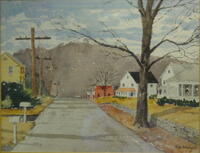 [Old Nahant Road]
-
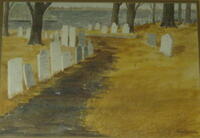 [Old Burying Ground]
-
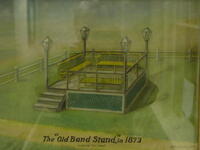 "Old Band Stand " in 1873 looking so. west
-
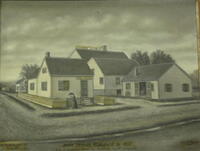 Main Street,Wakefield in 1857
-
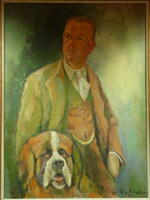 Lucius Morris Beebe and T-Bone Towser
-
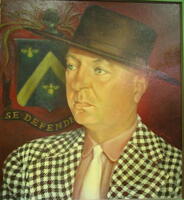 Lucius Morris Beebe
-
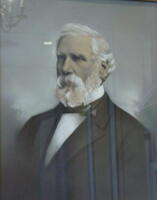 Lucius Beebe
-
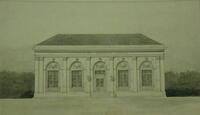 Library at Wakefield, Mass.
-
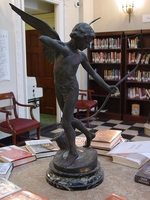 L'amour a l'arc
-
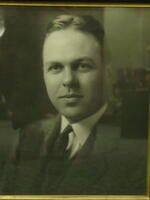 Junius Oliver Beebe 1894-1933
-
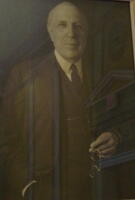 Junius Beebe
-
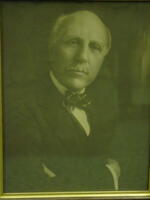 Junius Beebe
-
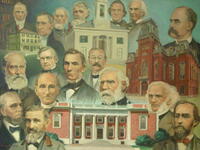 History of the Wakefield Library
-
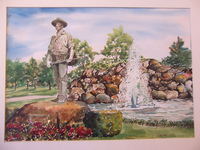 [Hiker monument and Rockery]
-
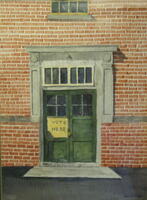 [Franklin School polling place]
-
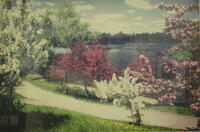 Floral Way mural
-
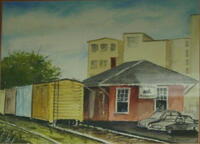 [Depot Restaurant Water Street]
-
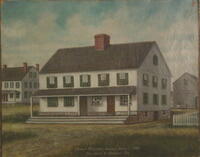 Daniel Norcross's grocery store in 1856 cor. Main & Chestnut Sts.
-
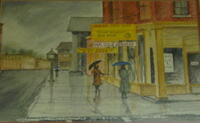 [Crystal Coin Shop Main Street]
-
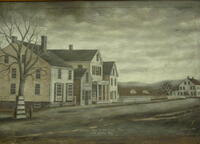 Corner Main & Mechanic Sts., South Reading, 1865
-
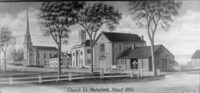 Church St., Wakefield about 1860
-
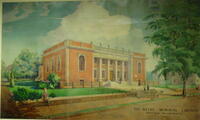 Beebe Memorial Library
-
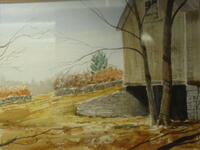 [Barn and tree]
-
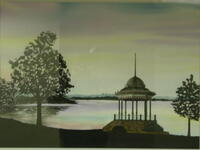 [Band stand, Wakefield Common]
-
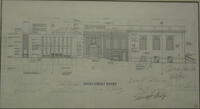 Avon Street entry [architectural elevation of Lucius Beebe Memorial Library]